

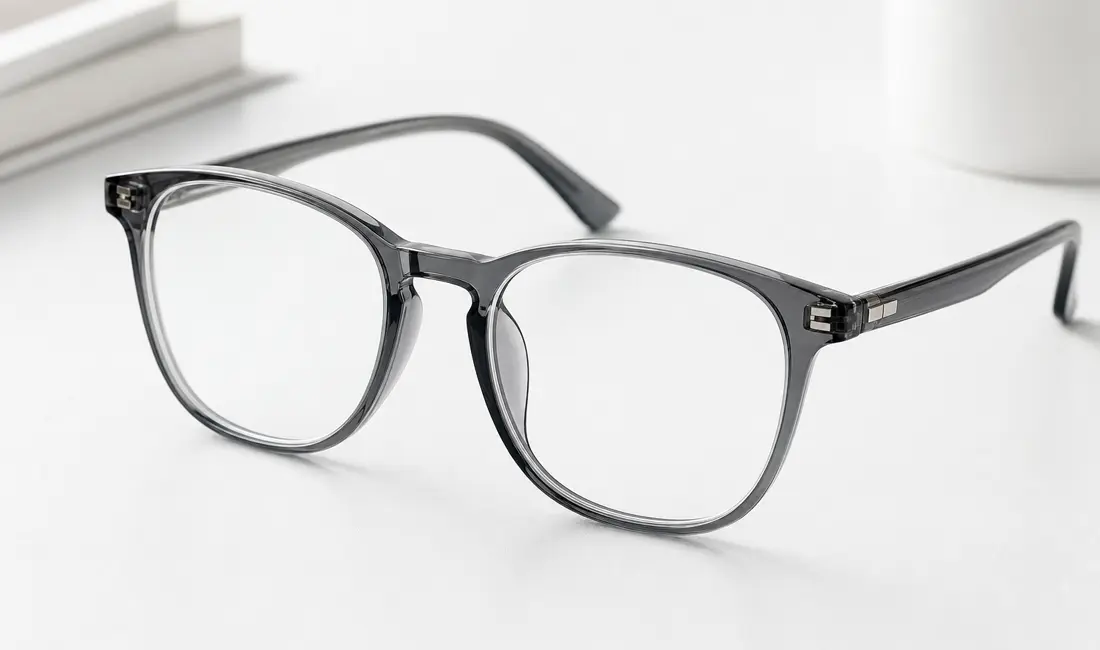
Single vision lenses are probably the most common prescription lenses out there. They correct vision at just one distance—near, far, or something in-between—using a consistent optical design across the whole lens. Unlike bifocals or progressives, which juggle more than one viewing zone, single vision lenses just stick to one job.
People with myopia, hyperopia, presbyopia, or astigmatism who need help at a single distance usually turn to these. If you’re squinting at your phone, struggling to read, or having trouble seeing while driving, it’s a good idea to get your eyes checked and see if a distance-specific prescription is right. Single vision lenses just make sense when your main visual needs focus on one activity.
Knowing how lens design, material, and coatings impact performance can help you (or your customers) choose the right lens for each frame and prescription. This guide dives into who actually needs single vision lenses, how they stack up against multifocals, and what you should think about when ordering—especially if you’re buying for business.
What Are Single Vision Lenses and How Do They Work?
Single vision lenses fix vision at one main distance, with the same prescription across the whole lens. The prescription—sphere, cylinder, maybe prism—targets specific refractive errors that mess with clarity at that distance.
One Viewing Distance and Prescription Components
These lenses are all about one main distance—whether it’s for seeing far away, up close, or for a specific task. The design stays the same across the lens, so you get steady correction everywhere you look. Your prescription might have a sphere for basic correction, a cylinder for astigmatism, or a prism if your eyes need help lining up. The distance you need to see at determines the purpose, and the prescription spells out the correction you need.
Correctable Refractive Errors
Single vision lenses handle myopia (distance), hyperopia or presbyopia (near), and astigmatism when matched with the right sphere. Your refractive condition and the distance you want to see at decide your prescription and the lens’s job. For example, someone with myopia might need distance correction for driving, while presbyopia usually means you need help reading. Astigmatism correction smooths out blur from an irregular cornea at the chosen distance.

Who Needs Single Vision Lenses for Distance, Near, or Task-Specific Work?
Single vision lenses work best for folks who just need correction at one distance—far, near, or for a specific task. The choice really depends on your refractive error and how often you switch between different distances during your day.
Distance Vision Needs
Distance single vision lenses help people with myopia who can’t see things clearly beyond arm’s reach. The lens has a consistent design for distance across its whole surface, with your prescribed sphere and cylinder values dialed in for your needs.
Driving, outdoor activities, and everyday distance viewing are classic uses. If you’re noticing blur at a distance, don’t guess—get a professional exam to nail down the right prescription (and see if you need prism).
Near and Task-Specific Vision Needs
Near single vision lenses are for reading and close-up work, mostly for people with hyperopia or presbyopia. You’ll usually get a prescription set for about 33 to 40 centimeters (standard reading distance), or maybe a bit longer for desk work.
Task-specific lenses are tuned for intermediate distances—think computer screens or workbenches. The task distance decides if you need a near or intermediate prescription. If you’re glued to close work, a dedicated single vision pair can be way more comfortable than a multifocal, especially if you don’t want to move your head around all day.
Multiple Viewing Distance Needs
If you’re constantly switching between near, intermediate, and far, single vision lenses can get annoying. You’ll probably find multifocals more practical since you won’t have to swap glasses all day.
Some people just keep a few single vision pairs for different tasks instead of using multifocals. It’s a trade-off—simplicity versus the convenience of one pair that does it all.
How Do Lens Design, Material Properties, and Coatings Affect Single Vision Lenses?
Design, material, and coatings all change how a lens performs and how long it lasts. The shape of your frame and how you’ll use the glasses help decide which features and coatings are actually worth it.
Conventional, Freeform, and Sports Designs
Conventional single vision lenses use standard manufacturing—works for most frames with typical curves. Freeform lenses get more personalized, taking into account things like how your glasses sit on your face, the tilt, and the distance from your eye, which helps reduce distortion. Sports single vision lenses are made for curved or wraparound frames and can handle face angles up to 35 degrees, keeping things sharp even when you move your head a lot. The frame shape and how you wear your glasses will steer you toward standard, personalized, or sports designs.
Material Performance Factors
The refractive index affects how thick and heavy your lenses end up. Different materials offer different impact resistance, Abbe value (which is about color clarity), and UV protection—though these don’t always go hand in hand. Higher index lenses are thinner but might have more color fringing at the edges. To really compare materials, you have to look at your prescription, lens size, and frame together. Think about thickness, weight, durability, and clarity as a package for your specific setup.
Coatings and Light-Management Options
Anti-reflective coatings cut down on glare and help more light get through. Scratch-resistant coatings make the surface tougher, and hydrophobic coatings keep water and smudges at bay, making cleaning less of a chore. Photochromic lenses darken in sunlight, while polarized lenses block glare from flat surfaces. Tinted lenses just tone down overall brightness but don’t filter specific light. The lighting where you’ll wear them, how much cleaning you can stand, and what your glasses go through all matter for picking coatings.
What Are the Pros and Cons of Single Vision Lenses?
Single vision lenses shine when you only need one distance, but they’re not great if you’re bouncing between distances all day. The cost and upkeep vary depending on your prescription, coatings, and how often you need replacements.
Core Advantages
Single vision lenses give you clear vision at one distance, with the same correction across the whole lens. That makes them easy to get used to—there’s no weird transition or hunting for the “right spot.” They’re also quicker to make and fit in most cases, thanks to their straightforward design.
Personalized single vision lenses—like Freeform Single Vision Lenses and Schneider Single Vision Accuracy—can handle more complex frames or special uses. Sport Single Vision Lenses work for wraparound frames and face angles up to 35 degrees. These options make single vision lenses a solid choice even for tricky frames or sports.
Use Limitations
They only correct one distance. If you need to see clearly at near, intermediate, and far, you’ll be swapping glasses a lot. This gets old fast, especially for people with presbyopia whose eyes can’t adjust focus anymore.
If your day means jumping between reading, computer work, and looking across a room, managing different pairs can be a pain. Sometimes, the hassle of carrying multiple pairs outweighs the simplicity of single vision lenses.
Cost and Maintenance Factors
Price depends on your prescription, the lens design, and any coatings you pick. Higher powers, fancy designs like Endless Single Vision Lenses, and premium coatings all add to the price. Cutting, thinning, and custom packaging can bump up the cost for business orders, too.
How much maintenance you’ll do depends on your coatings. Anti-reflective and hydrophobic options help keep lenses cleaner, but you’ll still need to wipe them down regularly. How often you replace them comes down to scratches, durability, and whether your prescription changes. If you’re juggling several pairs for different distances, expect higher upfront and ongoing costs compared to just one multifocal pair.
How Do Single Vision, Bifocal, and Progressive Lenses Compare?
Single vision lenses fix one distance. Bifocals split two distances with a visible line. Progressives blend three distances—distance, intermediate, and near—without any lines.
Functions of the Three Lens Types
Single vision lenses cover just one focal distance, with the same prescription over the whole lens—good for distance, near, or a specific working range.
Bifocals have two zones: the top for distance, the bottom for near. You can see the line between them.
Progressives blend three viewing zones in one lens, no lines. The top is for distance, middle for intermediate, and bottom for near. The prescription shifts gradually between them.
Viewing Zones, Appearance, and Use
| Lens Type | Zones | Visible Line | Adaptation | Image Jump |
|---|---|---|---|---|
| Single Vision | One | No | Minimal | No |
| Bifocal | Two | Yes | Short | Yes |
| Progressive | Three | No | 1 week to 2 months | No |
Single vision lenses are great for consistent one-distance tasks, like reading or driving. Bifocals are handy if you switch between two distances, but they’re not great for in-between. Progressives are the go-to for digital work, multitasking, or if you need smooth transitions between different distances.
Selection by Viewing Needs
If you’re just starting with presbyopia and don’t need multi-distance correction, single vision lenses might be enough. If your day is split between two main distances, bifocals can work.
People who jump between near, intermediate, and far—like digital workers—usually do better with progressives. The intermediate zone is a lifesaver for screens and dashboards, so you don’t need separate pairs.
Your lifestyle, how often you change focus, and your patience for getting used to new lenses all play into your choice. Always get a professional exam and prescription before making the final call.
How Should Optical Buyers Specify and Order Single Vision Lenses?
Ordering right means having the full prescription, frame details, and clear instructions. Always double-check product limits and service options before placing an order.
Provide Prescription and Frame Parameters
Every single vision order needs sphere power, cylinder, axis (if astigmatism is present), pupillary distance, and the intended viewing distance. If prism is prescribed, include prism power and base direction—most processing maxes out at 5Δ.
Frame measurements should include A-dimension, B-dimension, bridge width, and diagonal blank size. For oval or custom lens diameters, send a frame trace or physical sample. Curved or high-base-curve frames also need pantoscopic tilt, face-form angle, and vertex distance for accurate calculations in freeform or sport single vision designs.
If you leave out key data, production slows down and the risk of a bad fit goes up, especially with strong prescriptions where centration is unforgiving.
Confirm Product-Specific Limits
Freeform single vision lenses cover powers from -27.00D to +17.00D. Sport single vision lenses can handle face angles up to 35 degrees. Schneider single vision designs use over 10,000 control points for personalized surface shaping.
Not every design works with every prescription, frame curve, or working distance. It’s smart to check compatibility before you order, especially for unusual prescriptions, high-base curves, or wide viewing angles.
With oval or custom diameters, confirm the blank size and shape. Standard round blanks just don’t fit every frame geometry—sometimes you’ll need custom processing.
Define Processing and Service Requirements
Processing options include edging, assembling, thinning, coatings, and custom packaging. If you need help with inventory or delivery timing, you can request frame warehousing and logistics.
Choose coatings based on lighting and exposure. Specify anti-reflective, scratch-resistant, hydrophobic, photochromic, polarized, or tinted treatments when you order, along with any frame-specific edging or assembly needs.
Be clear about your turnaround, shipping, and quality checks up front. This helps avoid surprises later. Defining services early keeps rework to a minimum and supports consistent quality on repeat orders.
What Do Buyers Commonly Ask About Single Vision Lenses?
Buyers usually ask about how long lenses last, care instructions, certifications, customization, and if there are age limits. These questions mostly come down to durability, compliance, flexibility, and whether single vision lenses are a long-term solution.
How Long Do Single Vision Lenses Last?
Single vision lenses last until your prescription changes, the coatings wear out, or the lenses get scratched or damaged. There’s no official expiration date. How fast they wear depends on how you clean them, where you store them, and how much heat or chemicals they see.
Coating life varies. Anti-reflective and scratch-resistant coatings often show wear after 18-24 months of regular use. You’ll need to replace lenses if surface damage starts to affect vision or if you get a new prescription.
Replace your lenses when your vision needs change or the surface gets too beat up—not just because of a set timeline.
How Should Single Vision Lenses Be Cleaned and Maintained?
Clean your lenses with lukewarm water and mild dish soap or a lens cleaner the manufacturer recommends. Use a microfiber cloth—paper towels, your shirt, or harsh cleaners can scratch or damage coatings.
Always rinse lenses before wiping to wash away grit that might scratch them. Keep glasses in a case when you’re not wearing them to avoid scratches and dirt. Don’t leave them in hot places, like on a car dashboard, since heat can wreck coatings and even warp the lens.
Check lenses occasionally for coating wear, edge chips, or stress around the frame. If you spot problems, it’s probably time for new lenses or a recoating.
Are Single Vision Lenses Subject to Specific Certifications?
Single vision lenses sold in regulated markets have to meet optical standards like ANSI Z80.1 in the U.S. or ISO 8980 internationally. These set limits for things like prescription accuracy, prism, thickness, and impact resistance. Safety or sports lenses have to pass extra impact tests.
Some coatings come with their own certifications for UV protection, scratch resistance, or photochromic speed. If you’re buying for a regulated industry or government, always check that the lenses come with the right test certificates and labels.
Not every market requires certification marks on finished lenses, but most B2B suppliers will provide test documentation if you ask.
Can Single Vision Lenses Be Ordered in Custom Diameters?
Yes, you can order single vision lenses in standard round diameters or in custom oval and specialty shapes. Standard sizes run from about 50 mm to 80 mm, which fits most frames. For custom shapes, you’ll need to provide a frame trace or measurements like horizontal width, vertical height, bridge, and temple length.
Custom lens shapes are often needed for wraparound sports frames, high-base-curve designs, or any frame that doesn’t take a standard round blank. Suppliers who offer this usually require detailed frame data to calculate the right blank size and make sure your prescription can be centered in the lens.
Custom diameters usually mean longer processing times. Some suppliers set minimum order sizes or charge extra for tooling, depending on the lens design.
Can People Over 40 Still Use Single Vision Lenses?
Absolutely. People over 40 can use single vision lenses if they only need correction at one distance, or if they like having separate pairs for distance and reading. Presbyopia usually starts in your 40s, but that doesn’t mean you have to switch to multifocals. Plenty of people use single vision reading glasses for close work and keep distance glasses for driving or everyday activities.
Single vision lenses for intermediate distances—like computer or workbench use—are also popular with presbyopes who spend a lot of time at one working distance. These lenses give a wider, clearer field than the narrow reading area in a progressive lens.
It really comes down to how many distances you need to correct and whether you mind swapping glasses or want the convenience of a multifocal.

Conclusion
Single vision lenses are still the go-to choice for correcting vision at one distance. They work for people with myopia, hyperopia, astigmatism, or even presbyopia—anyone who needs clear vision at a set distance, not multiple zones.
They’re used for three main things: distance correction for daily life, near correction for reading or detail work, and intermediate correction for screens or benches. Each use matches a specific refractive need and task, covered by the sphere, cylinder, axis, and sometimes prism values in the prescription.
Choosing a single vision lens means looking at your main viewing distance, prescription, frame shape, and whether your tasks call for a standard, freeform, or sports design. Material, coatings, and edging add more options, but all build on the prescription and frame info you start with.
If you spend most of your time looking at one distance, single vision lenses give you sharp vision across the whole lens—no weird adaptation period or restricted viewing zones. If you’re always switching between tasks at different distances, though, you might need more than one pair or want to look at multifocals.
| Single Vision Strength | Single Vision Limitation |
|---|---|
| Full field of view at one distance | Corrects only one distance per lens |
| Immediate adaptation | Multiple pairs needed for multiple distances |
| Lower cost per lens | Switching required between tasks |
Single vision lenses still work well for both new wearers and presbyopes who prefer clear, dedicated correction over the convenience of multifocals—especially if they don’t mind switching pairs.
Frequently Asked Questions
What are single-vision lenses and how do they work?
A single vision lens gives you one prescription power across the entire lens, set for one main viewing distance. It might have sphere power for myopia or hyperopia, cylinder and axis for astigmatism, or prism for alignment issues. Because the lens is uniform, you get the same correction whether you’re looking straight ahead or off to the side—as long as it’s at the intended distance. The viewing distance defines the lens’s job; the prescription tells you what correction is needed at that distance.
Who should wear single-vision lenses for distance or near vision?
Distance single vision lenses are for people with myopia who have trouble seeing far away, or anyone who needs sharp vision for driving and daily activities. Near single vision lenses help with hyperopia or presbyopia, giving clear vision at a close-up, task-specific range—usually reading or detailed work. Astigmatism can be corrected in either distance or near lenses by adding the right cylinder and axis values. Your eye doctor will decide if you need distance or near correction based on your symptoms and tasks.
How do single-vision lenses compare to progressive lenses for everyday use?
Single vision lenses fix vision at one distance. Progressive lenses combine near, intermediate, and distance corrections in one lens, without visible lines. If you need to see clearly at several distances and switch a lot, progressives might be more convenient than juggling several single vision pairs. But if your routine is mostly at one distance, single vision lenses offer simplicity and a full clear field. It really depends on how often you switch tasks and whether you want to deal with adapting to progressives or paying extra for them.
Can single-vision lenses correct astigmatism?
Yes, single vision lenses can correct astigmatism by including cylinder and axis values with the sphere power. Astigmatism comes from uneven cornea or lens curvature, and single vision lenses apply the needed correction across the whole lens at the chosen distance. You can use them for distance, near, or specific tasks. You only need a bifocal or progressive if you also have presbyopia and need correction at more than one distance.
What are the common disadvantages or limitations of single-vision lenses?
Single vision lenses only correct one distance—distance, near, or a particular task—so they aren’t ideal if you’re constantly switching between close, intermediate, and far. If you need correction at several distances, you’ll probably need multiple pairs and have to swap them as your activities change. How much this matters depends on your daily routine and whether you value the simplicity and clarity of single vision over the hassle of switching.
What factors affect the cost of single-vision lenses and frames?
The price of lenses swings quite a bit depending on your prescription and how complicated the lens design is. If you choose freeform calculations over the usual type, expect to pay more. Add-ons like anti-reflective or scratch-resistant coatings, or those photochromic treatments that change with the light, all bump up the cost. Even getting the lenses cut and fitted for your specific frame shape isn't free. Then there's the frame itself—your choice here, along with how much upkeep it needs and how often you end up replacing it, really shapes what you’ll spend in the long run. And don’t forget the lens material: things like refractive index, thickness, weight, and impact resistance can all nudge the price up or down, depending on your prescription and what size lenses you need. Honestly, it's a lot to weigh if you want the right balance of comfort and cost.